
A friend of mine got lipo 360 last year. Six months out, one flank still looked different from the other. A visible dent sat above her hip on one side. She swore the surgery just "didn't work" for her body.
People repeat that phrase constantly online, and it's almost never accurate. Something specific happened, even when nobody explains what. This piece walks through the actual mechanisms behind a liposuction gone wrong Miami story. It covers why treating the entire midsection changes the risk picture, and what a real lipo 360 recovery should look like, so you can avoid becoming someone else's cautionary tale.
It's rarely "the fat didn't come off"
Patients usually expect one of two outcomes: it worked, or it didn't. Real results are messier than that. The most common complication isn't failure. It's unevenness.
A large systematic review and meta-analysis of liposuction outcomes named contour deformity as the single most frequent complication. It showed up more often than infection, seroma, or hematoma combined. Indentations and irregular contours also top the risk list on The Aesthetic Society's official liposuction safety page.
Here's why 360-degree work makes this more likely, not less. Traditional lipo targets one zone. Lipo 360 blends multiple zones into one continuous result: abdomen, flanks, and back. Every transition point between treated areas is a place where fat removal has to taper smoothly. Miss that taper by even a little, and a step, ridge, or dent shows up right where two zones meet. That's often what people mean when they say lipo 360 "didn't work." The fat came off. The blending didn't hold up.
Some asymmetry after any liposuction is normal, and worth separating from an actual problem. Minor differences in swelling between sides during the first few months are expected. Temporary numbness along treated areas is common too, and usually fades over weeks. A visible step or dent that persists past the six-month mark, once swelling has fully resolved, is a different story, and worth a direct conversation with your surgeon about whether a touch-up is warranted.
The real risk multiplier in a 360-degree case
Treating the whole midsection in one session means more tumescent fluid. More tumescent fluid means more lidocaine. Lidocaine has a dose ceiling tied to body weight, and that ceiling matters more than most patients realize.
Anesthesia safety research on tumescent liposuction has flagged wide inconsistency in what counts as a safe lidocaine dose. Peak absorption sometimes doesn't occur until hours after the injection. By then, the patient has often already gone home. A single-zone procedure rarely gets close to that ceiling. Treating abdomen, flanks, and back together, the way a full 360 case does, changes that math fast. Covering that much surface area takes substantially more fluid.
More fluid means more operative time, too, and that connection isn't incidental. The same meta-analysis on liposuction complications found large-volume procedures require longer operative times. Longer operative time correlates directly with worse outcomes. ASPS guidance on liposuction safety flags special considerations once a single session removes more than five liters of fat. A full 360 case can approach that threshold quickly on a larger frame.
None of this means lipo 360 is inherently dangerous. A bigger procedure just needs a surgeon actively managing fluid volume, dosing, and pacing. Autopilot, treating three zones back-to-back without adjusting, is where trouble starts. Ask directly how your surgeon plans and tracks lidocaine dosing for a full 360 case. A vague answer is worth pausing on.
Skin elasticity: the candidacy question nobody explains well
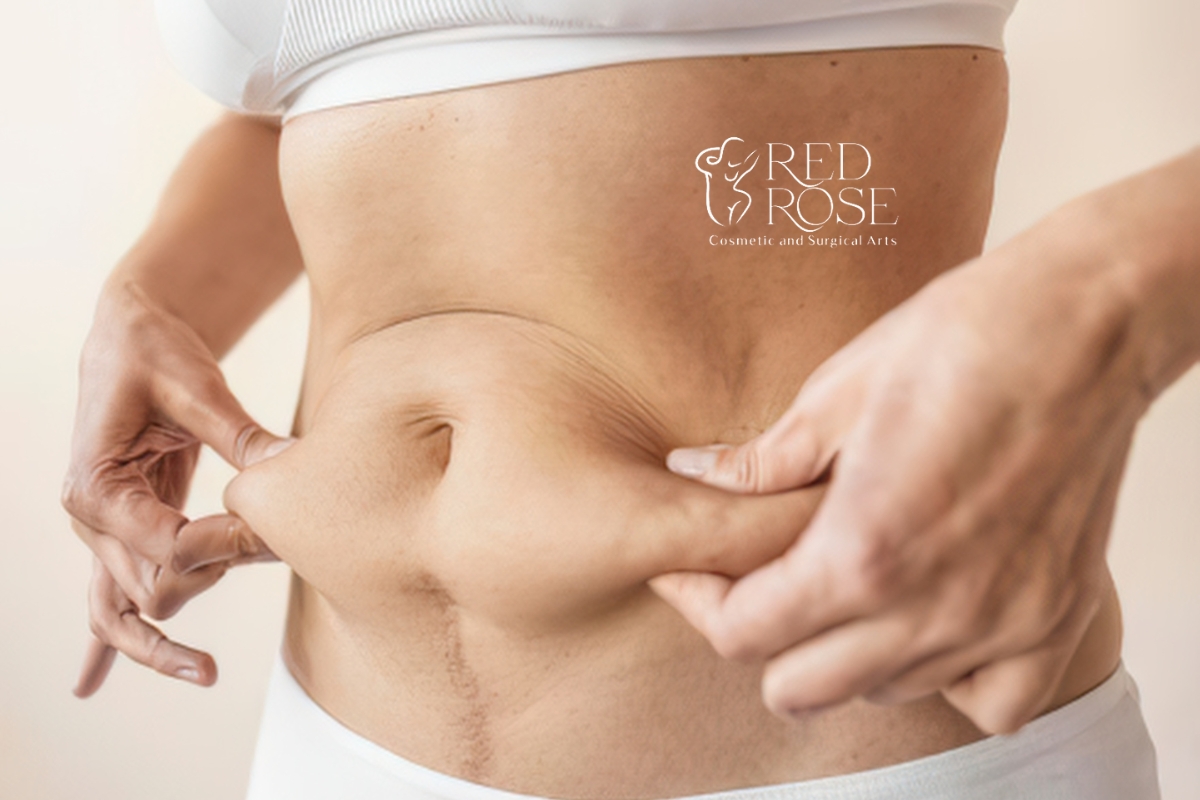
Liposuction removes fat. It doesn't tighten skin. That distinction gets lost constantly in most marketing, and it's often the real explanation behind a "lipo 360 didn't work" story.
Skin needs enough elasticity to shrink back down smoothly once fat comes out from underneath it. Younger patients with good skin quality usually see that happen well. Patients with looser skin, from age, prior weight loss, or pregnancy, face a different outcome. The same procedure that gives one person a smooth result can leave another with visible looseness, folds, or an uneven surface.
This is a candidacy conversation, not a technique problem. A surgeon who evaluates skin quality honestly might recommend a smaller treatment area. They might suggest combining the procedure with a skin-tightening step, or occasionally a different procedure entirely. Skipping that evaluation sets some patients up for disappointment. Running everyone through an identical 360 plan, regardless of their skin, means a few will blame the surgery for something their own skin quality caused.
Age plays a role here too, though it's not a hard cutoff. A 25-year-old and a 55-year-old with the same amount of fat in the same areas can end up with noticeably different skin retraction, even from an identical procedure. That's biology, not inconsistency on the surgeon's part. A good consultation sets that expectation before surgery, instead of leaving a patient to discover it in the mirror months later.
When lipo 360 gets combined with a BBL
Plenty of 360 cases don't stand alone. Fat harvested from the abdomen, flanks, and back frequently becomes donor material for a Brazilian butt lift performed in the same surgery, which adds another layer of planning most patients never hear about.
That combination changes the calculus. A surgeon has to decide how much fat to remove purely for contouring versus how much to preserve, purify, and reinject elsewhere. Removing too aggressively during the 360 portion can leave less usable fat for transfer than the patient expected going in. Too conservative an approach, aimed at protecting donor volume, can leave the 360 contouring itself looking incomplete. Getting that balance right depends on an honest conversation about priorities before the first incision, not a default split applied to every combined case the same way.
Combined cases also stack the fluid and operative-time factors already covered above, on top of a longer anesthesia window overall. That's not a reason to avoid combining procedures. Plenty of patients do it successfully. It's a reason to ask your surgeon directly how they sequence and balance a combined 360-and-BBL case, rather than assuming it works the same as either procedure done alone.
What lipo 360 recovery actually looks like
Recovery mechanics explain a good portion of the "this looks wrong" panic that happens well before healing finishes.
Swelling peaks around days three through five, then stays significant for weeks. Because 360 work covers such a wide surface area, that swelling doesn't sit in one tidy spot. It shifts. Fluid often pools lower, in the hips or pubic area, a few days after surgery. That shift alarms patients who don't expect it, but it's normal and temporary, not a sign anything went wrong.
Compression garments matter enormously here, more than in a single-zone procedure. They apply even pressure across multiple treated regions at once. That pressure helps skin redrape smoothly over the newly contoured shape. Skipping garment time, or wearing it inconsistently, raises the odds of fluid pooling and contour irregularity. Both get misread as surgical error later on.
Surgeons often recommend lymphatic massage for multi-zone cases specifically. Manual drainage helps move fluid before it hardens into firm, lumpy areas under the skin. Patients who skip these sessions sometimes develop palpable firmness that can take months longer to resolve on its own.
Final results take time to show up honestly. Swelling that hasn't cleared by week six still masks the real contour. Most surgeons won't give a final assessment before three to four months. Plenty of irregularities that look alarming early on resolve completely by month six, no intervention needed. Comparing your own week-four photo to a friend's six-month result is one of the fastest routes to unnecessary panic.
Activity restrictions follow their own schedule, too. Most patients return to light walking within days, since movement supports circulation and helps manage swelling. Anything strenuous, heavy lifting, core work, or high-impact cardio, usually waits four to six weeks. Jumping back into an intense workout routine early doesn't speed healing. It tends to increase swelling and can disrupt the compression garment's job right when it matters most.
Questions worth asking before you book a 360 case
A handful of direct questions tend to separate a well-planned 360 procedure from a rushed one.
- How many liters of fat do you expect to remove, and how does that compare to the 5-liter threshold for added precautions?
- How do you plan and monitor lidocaine dosing across a full 360 treatment area?
- How do you handle the transition zones between the abdomen, flanks, and back?
- Given my skin quality, am I actually a strong candidate for a full 360 treatment area?
- What does your garment and lymphatic massage protocol look like after surgery?
If you're researching 360 liposuction Miami options and want the plan explained before you commit to a date, that conversation starts with candidacy, not a sales pitch. Verify board certification independently, too. A board-certified surgeon operating in an accredited facility carries a materially different risk profile. Going with a lower price elsewhere often means less oversight and less fluid monitoring, not just a better deal.
Results vary by patient, and a surgeon who explains that honestly, instead of promising a flawless snapback, is giving you real information to work with. Consultation required, before any date gets set, is what actually protects you from becoming the next "didn't work" story.
What a real lipo 360 Miami consultation looks like at Red Rose
At Red Rose Cosmetic and Surgical Arts, that skin and candidacy evaluation happens before a treatment plan gets built. Patient volume stays intentionally low. One board-certified surgical team works with a husband-and-wife CRNA duo managing anesthesia. Both spent years doing exactly that across other South Florida cosmetic surgery offices. The liposuction page walks through how the practice approaches body contouring, and the pre-operative care guidance covers what needs to happen before a multi-zone case gets scheduled at all.
Fluid and lidocaine management for a full 360 case gets planned around your body specifically. It's not run on a standard template regardless of size. The FAQ page covers how 360 liposuction differs from treating a single area, along with financing available for appropriate candidates. Check the before-and-after gallery for real multi-zone results across different body types, and meet Dr. Carol Kim-Le, the board-certified surgeon behind the practice's procedures.
For a case this size, recovery support carries the same weight as the surgery itself. The post-operative care guidance covers the compression schedule and lymphatic massage recommendations. It also covers the swelling timeline that determines when a result is actually finished, not just when it looks alarming at week three. Start at the Red Rose homepage to see the full range of procedures and the team behind them.
A lipo 360 that "doesn't work" almost always has a specific cause behind it. Sometimes it's a fluid plan pushed too far, and sometimes it's a candidacy mismatch nobody flagged. Other times it's a compression protocol skipped during recovery. Ask about all three before you book. You'll be protecting the result you're paying for instead of hoping for the best.
My friend, for what it's worth, went back for a second opinion at month eight. The dent above her hip turned out to be a small, persistent pocket of firm tissue where two treatment zones met, exactly the kind of transition-line issue described above. A short in-office revision under local anesthesia resolved it. Nothing had "not worked." One spot just needed a second pass, and a specific answer instead of a shrug would have saved her months of worry.


Ready When You Are
Have questions about Insights?
Book a free consultation with our team and get answers tailored to you.